Quick Answer
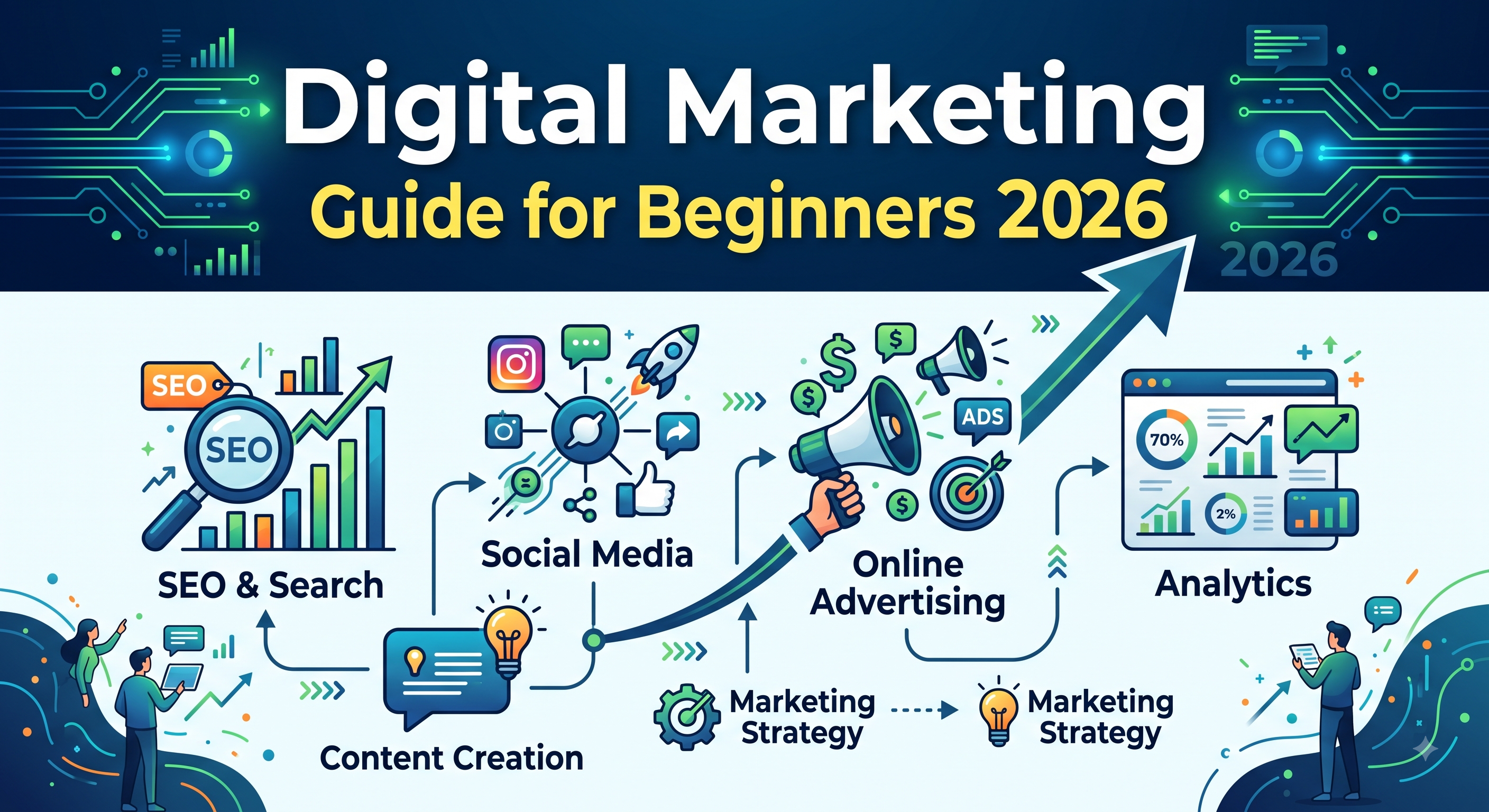
Digital marketing is the process of promoting products, services, or brands through online channels such as search engines, social media, websites, email, and digital advertising. Beginners can start by learning the fundamentals of SEO, social media marketing, content marketing, paid advertising, and analytics, then develop practical skills through real-world projects.
Introduction
Digital marketing has become an important part of how businesses attract customers, build brands, and generate sales. From a local business promoting its services on Instagram to an e-commerce company running Google Ads, businesses of almost every size now depend on online marketing to reach potential customers.
For beginners, however, digital marketing can initially seem complicated. There are many different areas to understand, including SEO, social media marketing, content marketing, email marketing, Google Ads, Meta Ads, analytics, and website optimization.
The good news is that you don’t need to learn everything at once.
A structured approach can help you understand the fundamentals first and then gradually develop more advanced skills. Whether you are a student, freelancer, business owner, working professional, or someone planning a career change, learning digital marketing can give you practical skills that can be applied to real businesses.
This complete beginner’s guide explains what digital marketing is, how it works, the major channels you should learn, career opportunities, common mistakes, and how to start building your skills in 2026.
What Is Digital Marketing?
Digital marketing is the use of online channels and digital technologies to promote a business, product, service, or brand.
Instead of relying only on traditional marketing methods such as newspapers, television, radio, or physical advertising, digital marketing allows businesses to reach customers through online platforms.
Common digital marketing channels include:
- Search engines
- Websites
- Social media
- Online advertising
- Content platforms
- Mobile applications
For example, imagine a small clothing business.
The business could use:
- SEO to appear in Google searches.
- Instagram to showcase new products.
- Meta Ads to reach potential customers.
- A website to sell products.
- Email marketing to communicate with existing customers.
Together, these activities form part of a digital marketing strategy.
Why Is Digital Marketing Important in 2026?
The way people discover and research businesses has changed significantly.
Customers increasingly use digital channels to:
- Search for products
- Compare services
- Read reviews
- Watch product videos
- Follow brands
- Contact businesses
- Make purchases
This makes an online presence important for businesses that want to remain competitive.
1. Reach a Larger Audience
Digital marketing allows businesses to reach customers beyond their local area.
A small business can target:
- Local customers
- National audiences
- International customers
- Specific interest groups
This level of reach was much more difficult and expensive through many traditional marketing methods.
2. Target Specific Audiences
Digital advertising platforms allow businesses to target audiences based on factors such as:
- Location
- Age
- Interests
- Online behavior
- Search intent
Better targeting can help businesses spend their marketing budget more efficiently.
3. Measure Marketing Results
One of the biggest advantages of digital marketing is measurement.
Businesses can monitor:
- Website traffic
- Clicks
- Leads
- Sales
- Engagement
- Advertising costs
- Conversions
This allows marketers to identify what is working and what needs improvement.
4. Build Long-Term Brand Visibility
Digital marketing isn’t only about immediate sales.
Consistent content, SEO, social media activity, and useful resources can help a business build visibility and trust over time.
Major Areas of Digital Marketing
Digital marketing is a broad field. Beginners should understand the major areas before deciding where to specialize.
Search Engine Optimization (SEO)
SEO is the process of improving a website so that it can appear more prominently in search engine results.
SEO includes areas such as:
- Keyword research
- On-page SEO
- Technical SEO
- Internal linking
- Content optimization
- Website structure
- Off-page SEO
For example, if someone searches for “digital marketing course online,” a well-optimized website may have an opportunity to appear in relevant search results.
SEO generally requires patience because rankings can take time to develop.
Social Media Marketing
Social media marketing involves using platforms such as Facebook, Instagram, LinkedIn, YouTube, and other social networks to build an audience and promote a business.
A social media strategy can include:
- Educational posts
- Short videos
- Product demonstrations
- Customer stories
- Polls
- Promotional content
- Community engagement
Social media is particularly useful for building relationships and increasing brand awareness.
Google Ads and Search Advertising
Google Ads allows businesses to show advertisements when people search for relevant keywords.
For example, a digital marketing training business could advertise when someone searches for terms related to learning digital marketing.
Paid search can provide faster visibility than SEO, but businesses need to manage their campaigns carefully to control advertising costs.
Meta Ads
Meta Ads allow businesses to advertise across platforms such as Facebook and Instagram.
Businesses can use Meta Ads for:
- Brand awareness
- Website traffic
- Lead generation
- Product promotion
- Sales
- Retargeting
Understanding Meta Ads can be particularly valuable for businesses that depend heavily on social media to reach customers.
Content Marketing
Content marketing involves creating useful information that attracts and educates a target audience.
Examples include:
- Blog posts
- Videos
- Guides
- Case studies
- Infographics
- Social media content
- Email newsletters
For example, a digital marketing website might publish beginner guides about SEO, Meta Ads, or social media marketing to attract people searching for those topics.
Good content can support both SEO and customer education.
Email Marketing
Email marketing allows businesses to communicate directly with subscribers and customers.
Common email campaigns include:
- Welcome emails
- Newsletters
- Product updates
- Promotional offers
- Educational sequences
- Customer follow-ups
Email can be especially valuable because businesses can build relationships with an audience they have already attracted.
Web Analytics
Analytics helps marketers understand what happens after users interact with their marketing campaigns.
Important metrics can include:
- Users
- Sessions
- Traffic sources
- Engagement
- Conversions
- Revenue
- Conversion rate
Without analytics, it becomes difficult to understand whether a marketing strategy is producing meaningful results.
How Does Digital Marketing Work?
Digital marketing generally follows a customer journey.
A simple example is:
Awareness → Interest → Consideration → Conversion → Retention
Awareness
The customer discovers your business through:
- Social media
- Advertising
- YouTube
- Blog content
Interest
The customer begins researching your product or service.
They may:
- Visit your website
- Read your blog
- Watch videos
- Follow your social media account
Consideration
The customer compares your business with alternatives.
They may look at:
- Reviews
- Pricing
- Features
- Testimonials
- Course information
Conversion
The customer takes the desired action.
This could be:
- Purchasing a product
- Booking a service
- Signing up for a course
- Filling out a form
Retention
After conversion, the business continues communicating with the customer through:
- Social media
- Offers
- Educational content
- Customer support
Understanding this journey helps beginners see how different digital marketing channels work together.
Digital Marketing for Beginners: Where Should You Start?
If you are completely new to digital marketing, don’t try to master every platform immediately.
Follow a simple learning path.
Step 1: Learn the Fundamentals
Start by understanding:
- What digital marketing is
- How online businesses attract customers
- Customer journeys
- Marketing funnels
- Different digital marketing channels
Step 2: Learn SEO
Understand how search engines work and how websites can attract organic traffic.
Start with:
- Keywords
- Search intent
- On-page SEO
- Content optimization
Step 3: Learn Social Media
Understand how businesses use social platforms to:
- Build audiences
- Create content
- Increase engagement
- Generate leads
Step 4: Learn Paid Advertising
After understanding the basics, learn:
- Google Ads
- Meta Ads
- Campaign objectives
- Audience targeting
- Ad creatives
- Conversion tracking
Step 5: Learn Analytics
Finally, learn how to measure marketing performance.
This allows you to make decisions based on data rather than assumptions.
Why Beginners Should Learn Digital Marketing Fundamentals First
One common mistake is jumping directly into advanced tools.
For example, someone might start learning Meta Ads without understanding:
- Target audiences
- Marketing funnels
- Customer journeys
- Landing pages
- Conversion tracking
This can make advertising more difficult.
A better approach is to first understand the fundamentals and then specialize.
If you want a structured starting point, the Digital Marketing Basics for Beginners course available through Digital Sanyaas can be a useful place to explore the foundational concepts before moving into more specialized areas.
Explore Digital Marketing Courses
The goal isn’t simply to complete a course. The goal is to understand how different digital marketing channels work together and then apply that knowledge through practice.
Skills You Can Develop Through Digital Marketing
Learning digital marketing can help you develop several practical skills.
SEO Skills
You can learn how to:
- Research keywords
- Optimize content
- Improve website structure
- Build internal links
- Analyze search performance
Social Media Skills
You can learn:
- Content planning
- Audience research
- Social media strategy
- Community engagement
- Performance analysis
Advertising Skills
You can develop knowledge of:
- Google Ads
- Meta Ads
- Campaign structures
- Audience targeting
- Budget management
- Conversion tracking
Content Skills
You can learn how to create:
- Blog posts
- Social media content
- Video ideas
- Landing page copy
- Email campaigns
Analytical Skills
You can learn to interpret:
- Traffic data
- Conversion rates
- Campaign performance
- Customer behavior
These skills can be useful across different marketing roles.
Career Opportunities in Digital Marketing
Digital marketing can lead to several different career paths.
SEO Executive
SEO professionals help businesses improve their organic search visibility.
Typical responsibilities include:
- Keyword research
- Content optimization
- Technical SEO
- Competitor analysis
- Reporting
Social Media Manager
Social media managers create and manage content strategies for brands.
They may handle:
- Content calendars
- Social posts
- Community management
- Engagement
- Reporting
Performance Marketing Specialist
Performance marketers focus on measurable advertising results.
They may manage:
- Google Ads
- Meta Ads
- Lead generation campaigns
- Conversion tracking
- ROAS analysis
Content Marketing Specialist
Content marketers develop strategies to attract and educate potential customers.
Digital Marketing Executive
Digital marketing executives may work across multiple channels, including SEO, social media, content, email, and paid advertising.
Freelancer
Digital marketing skills can also be used to provide services to businesses as a freelancer.
Possible services include:
- SEO
- Social media management
- Content writing
- Paid advertising
- Website optimization
How to Build Practical Digital Marketing Experience
Learning theory is only the first step.
You should also practice.
Create your own projects such as:
Project 1: SEO Website Audit
Choose a website and analyze:
- Titles
- Meta descriptions
- Headings
- Internal links
- Content
- Technical issues
Project 2: Social Media Plan
Create a 30-day content calendar for a fictional business.
Project 3: Advertising Campaign
Create a sample Google Ads or Meta Ads campaign.
Include:
- Campaign objective
- Target audience
- Ad copy
- Creative concept
- Budget
- Expected conversion goal
Project 4: Content Strategy
Create a list of 20 blog topics around one main industry.
These projects can become part of a portfolio.
Common Digital Marketing Mistakes Beginners Make
Trying to Learn Everything at Once
Digital marketing contains many different specialties.
Start with the basics and gradually expand your knowledge.
Focusing Only on Certificates
A certificate can demonstrate that you completed a course, but practical ability is more important.
Build projects and learn how to explain your decisions.
Ignoring Analytics
Marketing without measurement can lead to poor decisions.
Always understand what your numbers are telling you.
Expecting Immediate SEO Results
SEO often requires consistent effort and patience.
Don’t expect a new website or article to rank immediately.
Copying Competitors
Competitor research is useful, but copying another company’s strategy isn’t a sustainable marketing approach.
Study what works and understand why it works.
How to Choose a Digital Marketing Course
If you decide to take a course, evaluate it carefully.
Look for:
Beginner-Friendly Curriculum
The course should start with fundamentals before moving to advanced concepts.
Practical Learning
Look for assignments and projects rather than only video lessons.
Updated Information
Digital marketing changes frequently, so course material should remain relevant.
Multiple Marketing Channels
A beginner’s course should introduce the major areas of digital marketing.
Clear Learning Path
The course should tell you what to learn first and what to learn next.
If you’re comparing learning options, you can explore the available Digital Sanyaas courses and review the programs designed for different learning needs.
View All Digital Marketing Courses
Digital Marketing vs Traditional Marketing
| Feature | Digital Marketing | Traditional Marketing |
|---|---|---|
| Audience targeting | Highly flexible | Generally broader |
| Performance tracking | Detailed | Often limited |
| Geographic reach | Local to global | Depends on channel |
| Content updates | Fast | Usually slower |
| Budget flexibility | Often high | Depends on medium |
| Customer interaction | Two-way | Often one-way |
Digital marketing doesn’t necessarily replace every traditional marketing method. Instead, businesses can combine different channels depending on their audience and objectives.
Start Learning Digital Marketing Today
You don’t need to become an expert overnight.
Start with the fundamentals, understand how the major marketing channels work, and then practice through real or sample projects.
If you’re a beginner looking for a structured starting point, you can explore the Digital Marketing Basics for Beginners course and other learning options on Digital Sanyaas.
Learning the basics first can make advanced topics such as SEO, Google Ads, Meta Ads, social media marketing, and analytics much easier to understand.
Key Takeaways
- Digital marketing uses online channels to promote businesses, products, and services.
- SEO, social media, content, paid advertising, email, and analytics are major areas of digital marketing.
- Beginners should learn the fundamentals before specializing.
- Practical projects are important for developing real skills.
- Digital marketing can lead to careers in SEO, social media, paid advertising, content, analytics, and freelancing.
- A structured beginner-friendly course can make the learning process easier.
- Continuous practice and learning are important because digital marketing changes frequently.
Frequently Asked Questions
1. What is digital marketing?
Digital marketing is the promotion of products, services, or brands through online channels such as search engines, websites, social media, email, and digital advertising.
2. Is digital marketing good for beginners?
Yes. Beginners can start by learning fundamental concepts such as SEO, social media marketing, content marketing, paid advertising, and analytics before choosing a specialization.
3. How can I learn digital marketing?
You can learn through online courses, practical projects, tutorials, industry resources, and hands-on experience. A structured beginner course can provide a clear learning path.
4. What skills are needed for digital marketing?
Important skills include SEO, content creation, social media marketing, paid advertising, analytics, communication, research, and basic understanding of websites and online customer journeys.
5. Can I build a career in digital marketing?
Yes. Digital marketing offers career paths such as SEO executive, social media manager, performance marketing specialist, content marketer, digital marketing executive, and freelancer.
Conclusion
Digital marketing has become an important skill for businesses and professionals in 2026. From SEO and social media to paid advertising, content marketing, and analytics, it provides multiple ways to connect businesses with potential customers online.
For beginners, the best approach is to start with the fundamentals instead of trying to master every platform immediately. Learn how the digital marketing ecosystem works, practice each concept, build projects, and gradually specialize in an area that matches your goals.
If you’re ready to begin your learning journey, explore the Digital Marketing Basics for Beginners course and other programs available through Digital Sanyaas.
With consistent learning and practical experience, you can turn your knowledge of digital marketing into a valuable professional or business skill.